Strategy advisory
Supply chain
green transition
Preparing organisations for a circular future.
Strategy advisory I supply chain I green transition

I help organisations turn circular opportunities into business value by combining strategic thinking, supply chain experience and systems thinking.
The business case for circularity
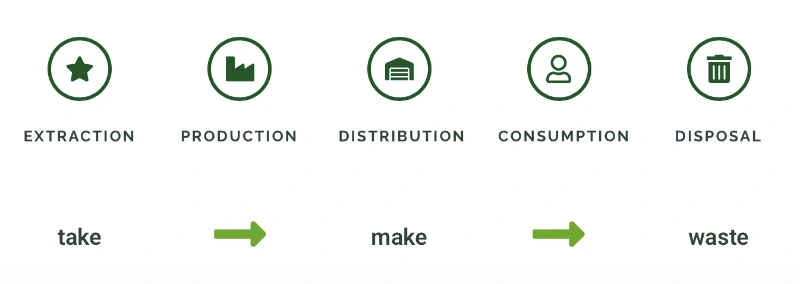
Traditional linear business models leave organisations vulnerable to volatile material prices, resource scarcity, geopolitical tensions, and climate shocks.
The risk of disruption to the supply of virgin materials is increasing, putting pressure on margins across industries.
Circular business models keep material supply under closer control, reduce exposure to external price swings, and can unlock revenue from recovered resources.
Maximise value
Circularity is at the core of natural systems we all depend on; systems where nothing is wasted and resource flows are renewed and regenerated.
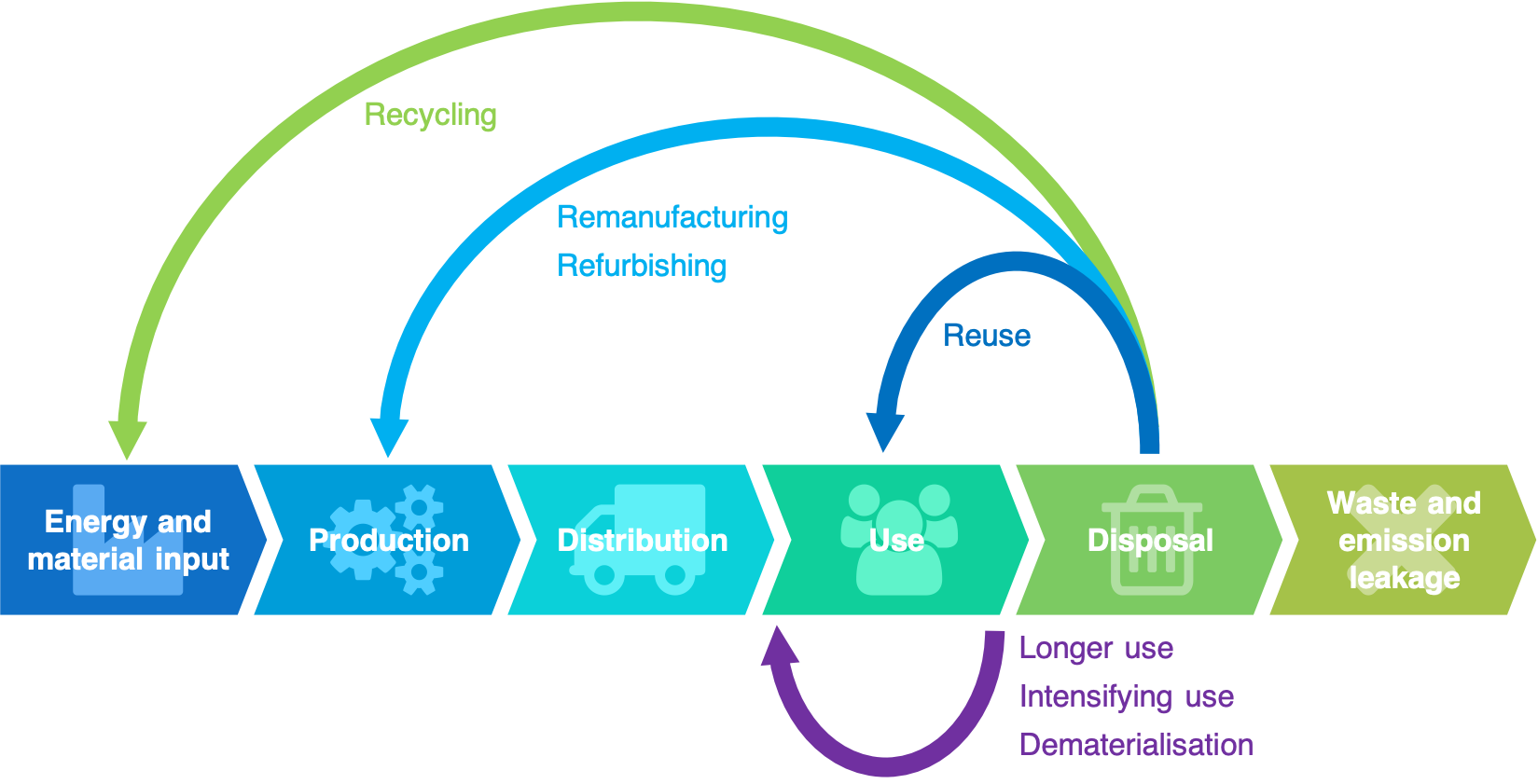
Circularity preserves value by keeping products, materials, and resources in use for longer. In a business context, this opens up new opportunities to reduce costs, manage risk, and build resilience.
Beyond decarbonisation
Today, many sustainability efforts focus primarily on carbon reduction. While important, opportunities from circularity often remain unexplored, even as rising material costs, supply uncertainty, and growing competition for critical resources make them increasingly relevant.
Circularity is also a powerful lever for decarbonising operations.
Circularity in practice
Circular strategies improve resource effectiveness by keeping value in circulation and eliminating waste. For durable products, this is achieved through smarter product design, take-back programmes, service-based models, and higher-quality materials. For shorter-lived products, such as certain types of packaging, the focus may instead be on renewable and biodegradable materials.
By adopting circular business models and operations, organisations increase resource effectiveness by closing material loops and retaining value within their product and service systems.
Let's find out where the numbers lead.
Whether circularity makes financial sense for your organisation depends on factors such as material intensity, supply chain exposure, and the regulatory environment.
Lupa can create a circular strategy tailored for your organisation.
Industry examples
These cases show what is possible when you design products and operations to retain value instead of disposing of it.
These cases show what is possible when you design products and operations to retain value instead of disposing of it.
An innovative, reusable and modular construction system
More sustainable kitchens through circular design
Cirkulære løsninger til e-handel
Find more examples of circular businesses to inspire you here.
Find more examples of circular success stories here.
This is how I work
My four-stage process for circular change.
Act
We work alongside your teams to pilot solutions, activate partner networks, and establish metrics that demonstrate value. Success requires both capability building and the right external partnerships.
Deliverable:
Plan
Together, we develop together actionable plans with defined timelines, investment requirements, responsibilities, and expected returns that your teams can execute.
Deliverable:
Understand
We evaluate feasibility by testing assumptions, exploring partnership possibilities, and modeling different scenarios to find the approaches with the strongest business case.
Deliverable:
Listen
We start by mapping your material flows, cost structures, and supply chain dependencies to identify where circular strategies can create the most value.
Deliverable:
Listen
We start by mapping your material flows, cost structures, and supply chain dependencies to identify where circular strategies can create the most value.
Deliverable:
Opportunity Assessment
Understand
We assess different circular strategies by reviewing design, materials, and operational choices, along with practical constraints and opportunities for collaboration with other circular specialists.
Plan
Together, we develop a business case for implementing the most promising circular strategies, aligned with your overall business strategy. This forms the basis for an implementation plan with activities, responsibilities, timelines, and resources, ready for the next stage.
Deliverable:
Feasibility Assessment
Deliverable:
Business plan and Implementation roadmap
Act
We help your teams pilot solutions, work with partners, and measure performance, building the skills and networks needed to turn your circular plans into results.
Deliverable:
Live circular operations